You ever try to fix your life with one big system? Like when you buy a planner, start a bullet journal, download a new budgeting app, and think this is the thing that will finally get everything aligned?
Now imagine that… but you’re Nike. And instead of a planner, it’s a massive tech overhaul meant to unite every warehouse, supply chain, and sneaker shipment around the world. Enter: ERP.
Nike’s early 2000s ERP rollout is a cautionary tale of good intentions, bad execution, and how even the most iconic brands can end up face-first in a spreadsheet disaster.
Let’s lace up.
What is ERP, and why did Nike need it?
ERP—short for Enterprise Resource Planning—is basically a central nervous system for a business. Instead of having finance, logistics, marketing, and supply chain running on different platforms, an ERP system brings everything together in one big, shiny interface.
Nike wanted a single-instance ERP, which means one core system across the whole global business. No duplicates. No delays. Just real-time decision-making and full visibility. That kind of setup can help a company:
- Predict demand more accurately
- Reduce overproduction and stockouts
- Streamline communication across departments
- React faster to global changes (hello, pandemics and factory delays)
It was ambitious. And, at the time, totally necessary. Nike was scaling fast and needed tech to keep up. So they partnered with i2 Technologies and fast-tracked the project.
The $400 million stumble
Here’s where it unravels.
According to Third Stage Consulting’s case study and CNET’s deep dive, Nike rolled out the new demand-planning module way too quickly. The data fed into the system was messy. Teams weren’t properly trained. And testing? Practically nonexistent.
So instead of better planning, the system started misfiring.
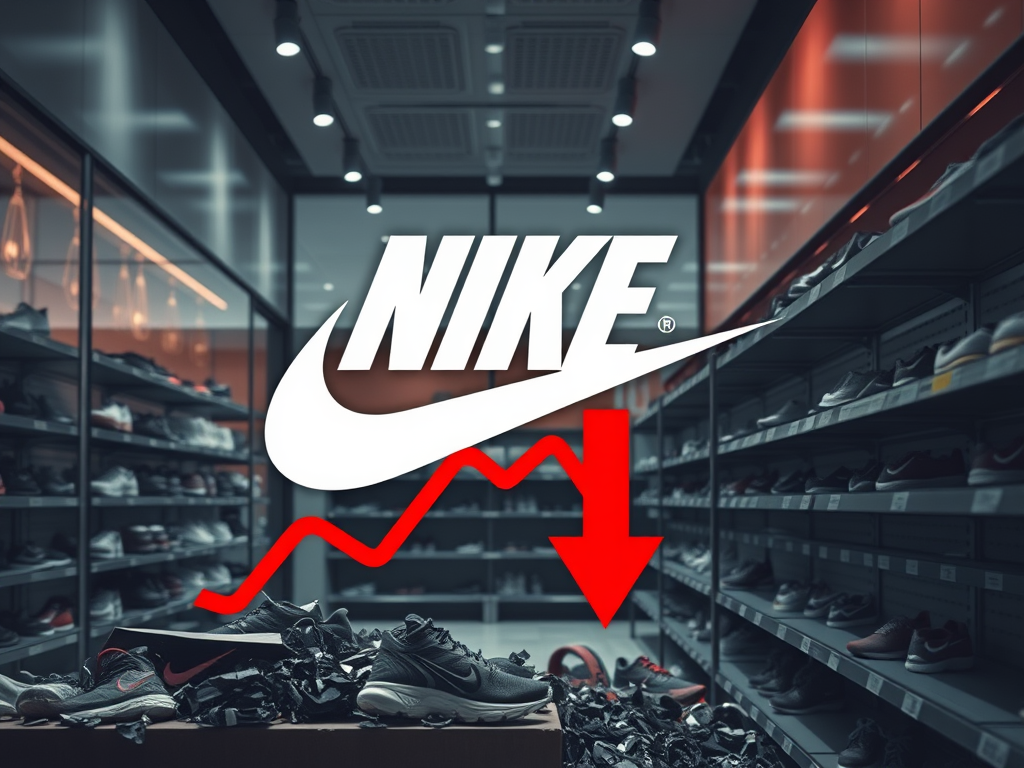
Nike ended up with warehouses full of the wrong shoes—overstocking low-demand models and under-delivering hot sellers like the Air Jordans. The ripple effect was brutal: $100 million in lost sales, stock value damage, public embarrassment, and internal chaos. The full damage was estimated at $400 million.
As CFO Magazine’s breakdown put it: this was a masterclass in how not to spend hundreds of millions on enterprise software.
Why Nike stuck with the system anyway
You’d think after a $400 million fumble, they’d scrap the whole thing. But nope. Nike knew that the concept wasn’t flawed—just the execution.
After rebuilding, retraining, and reworking the system, Nike’s single-instance ERP became a game-changer.
According to CIO’s recovery feature, here’s what started working:
- Real-time global visibility: With one consistent system, Nike could track inventory, demand, and production across the world instantly.
- Data-driven forecasting: Once cleaned up, the planning tools helped Nike reduce waste and better match supply to demand.
- Scalability: The ERP could grow with them, rather than needing endless patchwork fixes.
- Improved collaboration: With everyone accessing the same data, departments could actually communicate without endless email chains and file versions.
The takeaway? The tool wasn’t the problem—the rushed rollout was.
What other companies can learn (before they trip too)
ERP systems are like houseplants: they thrive with care, attention, and patience. Rush it, neglect it, or assume it’ll just “work,” and you’re left with a dead ficus and a lot of regret.
So, if your business (big or small) is thinking of investing in ERP, here’s my BrokeBella advice:
- Don’t rush it
Nike tried to go live in nine months. For a system that complex? That’s wild. Take your time to test, tweak, and train. - Data is everything
Garbage in = garbage out. If your data is inconsistent, outdated, or incomplete, your new system won’t fix that—it’ll amplify it. - Invest in training
Fancy software doesn’t mean anything if your team doesn’t know how to use it. Make space (and budget) for hands-on training and support. - Start small
Pilot it with one department or region first. Learn from that. Then scale. Nike tried to go global all at once—and paid the price. - Work with experts
Don’t just rely on your software vendor. Bring in independent consultants who can act as your advocate and guide. Especially those who know where the hidden potholes are.
The BrokeBella takeaway
Nike’s ERP flop wasn’t the end of the story—it was the messy middle. And honestly, I love that. Because sometimes the fix is worth the fallout. They tripped, regrouped, and turned their ERP into a competitive advantage.
So whether you’re streamlining your supply chain or just trying to get your Google Calendar to stop double-booking you, the lesson stands: slow down, clean your data, train your people, and don’t mistake fast for efficient.
ERP isn’t glamorous. But managing chaos? That’s powerful.
 Brokebella
Comment