It started, as most of my internet rabbit holes do, with a reel of Mickey ears, churros, and some suspiciously well-behaved toddlers on TikTok.
One tap turned into a scroll. Then an article. Then a video. And suddenly, I was neck-deep in Disney’s data collection practices, rethinking every innocent theme park memory I’ve ever had. Turns out, Cinderella’s castle isn’t the only magic trick at play here.
Welcome to the land of smart castles and smarter algorithms

Back in 2013, Disney introduced its MagicBand, a cute little wristband that doubled as a hotel key, payment method, and fast-pass to the rides. Adorable, right?
Also, an absolute goldmine of behavioral data.
With the help of RFID tech and a $1 billion analytics investment, Disney began quietly mapping out guest behavior: which rides they gravitate towards, what snacks they buy, how long they linger in the gift shop, and even how often they loop the same rollercoaster. It’s all fed into a sleek analytics ecosystem that helps them tweak operations in real time (Mixson, 2021).
Overcrowded zone? They’ll nudge you toward quieter areas using the My Disney Experience app. Need more staff at the snack cart? Algorithms know. Predicting your child’s favorite Disney princess? Already done.
Go Away Green isn’t the only way they subtly influence guest behavior. Now, they can practically reroute foot traffic with a push notification and a coupon.
Churros, smiles, and facial recognition

Beyond the MagicBands, Disney is venturing into AI-powered emotion tracking. That’s not a sci-fi plot. That’s an actual research project. Their night-vision-equipped cameras can analyze your facial expressions during shows to gauge how entertained you are. Happy? Scared? Bored? The algorithm sees it all.
Even the popcorn stand isn’t safe.
When big data goes a bit bananas
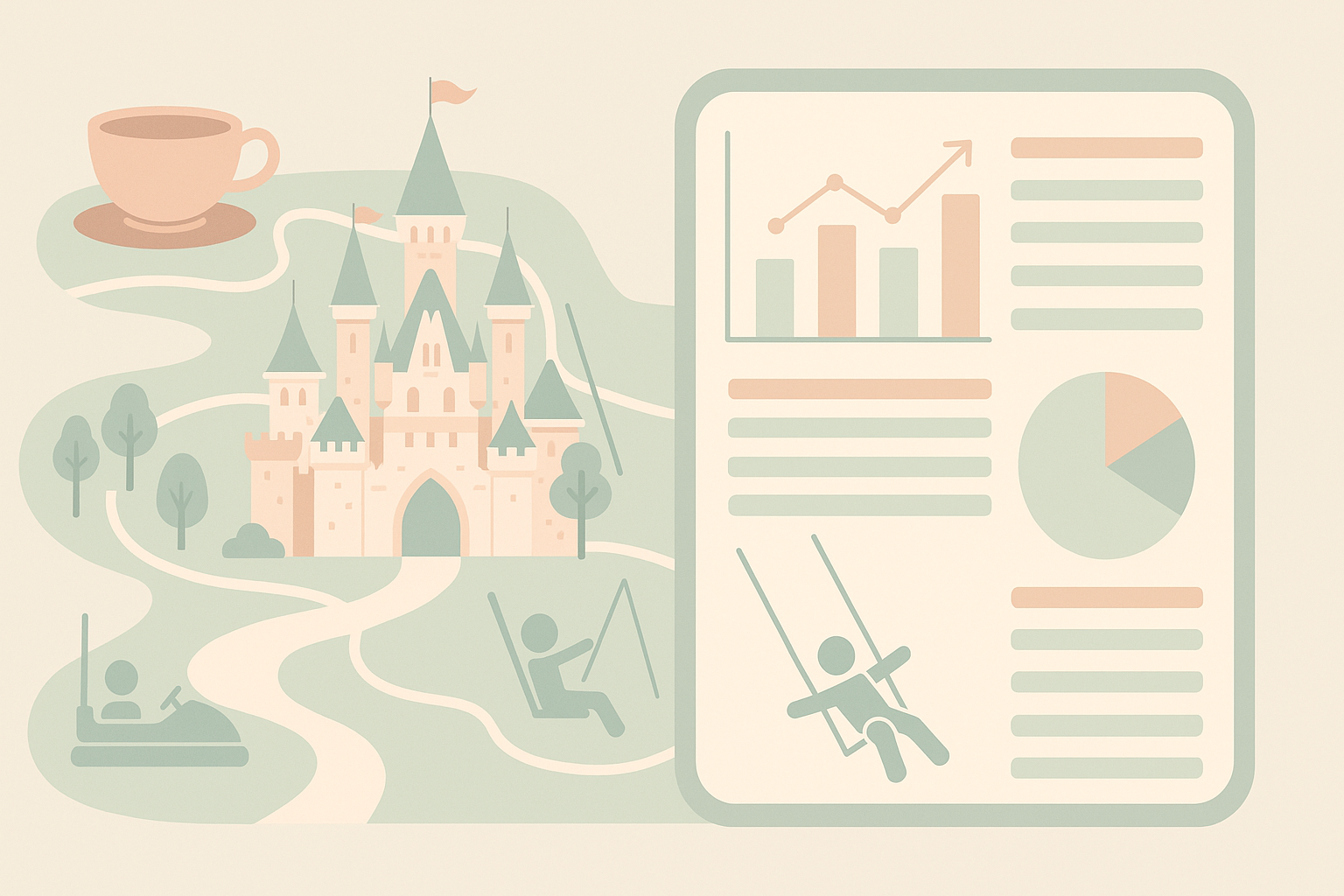
Just because Disney’s blending multiple unstructured data sources doesn’t mean it’s always right. Big data can sometimes make big mistakes. Here are a few scenarios:
- False flag foodie: You stop at the churro stand for your friend, and now Disney thinks you’re a dessert devotee. Suddenly, your app is drowning in snack promos.
- Rogue toddler data: Your kid has a meltdown in front of the Stitch ride. Now you’re served Lilo & Stitch merch for the next week.
- Stormy with a chance of error: Weather data misreads a hot day as increased guest interest in water rides. But maybe everyone just needed shade.
When multiple data streams converge, they can produce patterns that look meaningful but aren’t always accurate. A perfectly harmless detour to the gift shop could be mistaken for brand obsession.
Princesses, pretzels, and privacy concerns
It means the line between helpful personalization and low-key surveillance is thinner than Dumbo’s patience in a heatwave. Yes, it’s fascinating that Disney can optimize a ride schedule with such precision. But it’s also worth asking what we’re trading for that convenience.
Data is the new currency, and Disney’s park isn’t just a vacation spot. It’s a case study in behavioral economics, real-time analytics, and digital influence. They’ve essentially built a metaverse that blends magic with metrics.
And somehow, despite knowing all this, I still kinda want a Mickey pretzel.
Sources:
 Brokebella
Comment