
This isn’t a tinfoil hat moment. It’s a wake-up scroll in a fluffy robe.
I took a data test in my pajamas (as one does)
There I was, half-procrastinating on a study task, wrapped in a fleece blanket, sipping lukewarm tea — when I came across the Financial Times Data Value Calculator. I plugged in my details: age, location, the usual digital breadcrumb trail. And it told me I was worth $0.65.
Sixty-five cents. Not even a croissant. I blinked, slightly offended. Surely, I’m at least worth a latte?
Micro-cents and mega-profits: The wild world of data
Turns out, the reason my data feels worthless is because it’s being sold like popcorn at a matinee showing — in bulk. PCMag explains that the more generic or common your profile, the less valuable you are to data brokers. But if you’re a 20-something man with a six-figure income living in New York? Congrats, your data is the Beyoncé of microtransactions (PCMag, 2020).
Most of us, though? We’re bundled up and sold to advertisers for fractions of a cent. Think $0.0005 per person for age, gender, and ZIP code. If that sounds suspiciously low, that’s because it is — until you multiply it by millions.
We are the raw material (and the ad target)

In a 2019 piece from the Financial Times, journalist Rana Foroohar dives into this thing called surveillance capitalism. Basically, tech companies like Google and Meta aren’t just platforms. They’re mining operations. They scoop up our behaviors, repackage us into audience segments, and sell those segments to the highest bidder (FT, 2019).
And it works. Targeted ads bring in over half of Big Tech’s revenue. Your baby registry, search history, and obsession with budget airfare? All monetized. The data economy was worth $76 billion in 2019 and is projected to hit $200 billion. All while most of us still hit “Accept All Cookies” like it’s a polite RSVP.
A tiny rebellion: reclaiming my feed (and my peace)
So I did something dramatic — or, well, digitally assertive.
I started denying cookies like a moody vegan at a bake sale. I installed DuckDuckGo, checked every app’s permissions, and turned off personalized ads on Instagram (sorry, targeted handbag ads — we had a good run).
I even read the privacy policy. Okay, skimmed. But still. Baby steps.
I’m not quitting the internet. I’m just not donating myself to it anymore
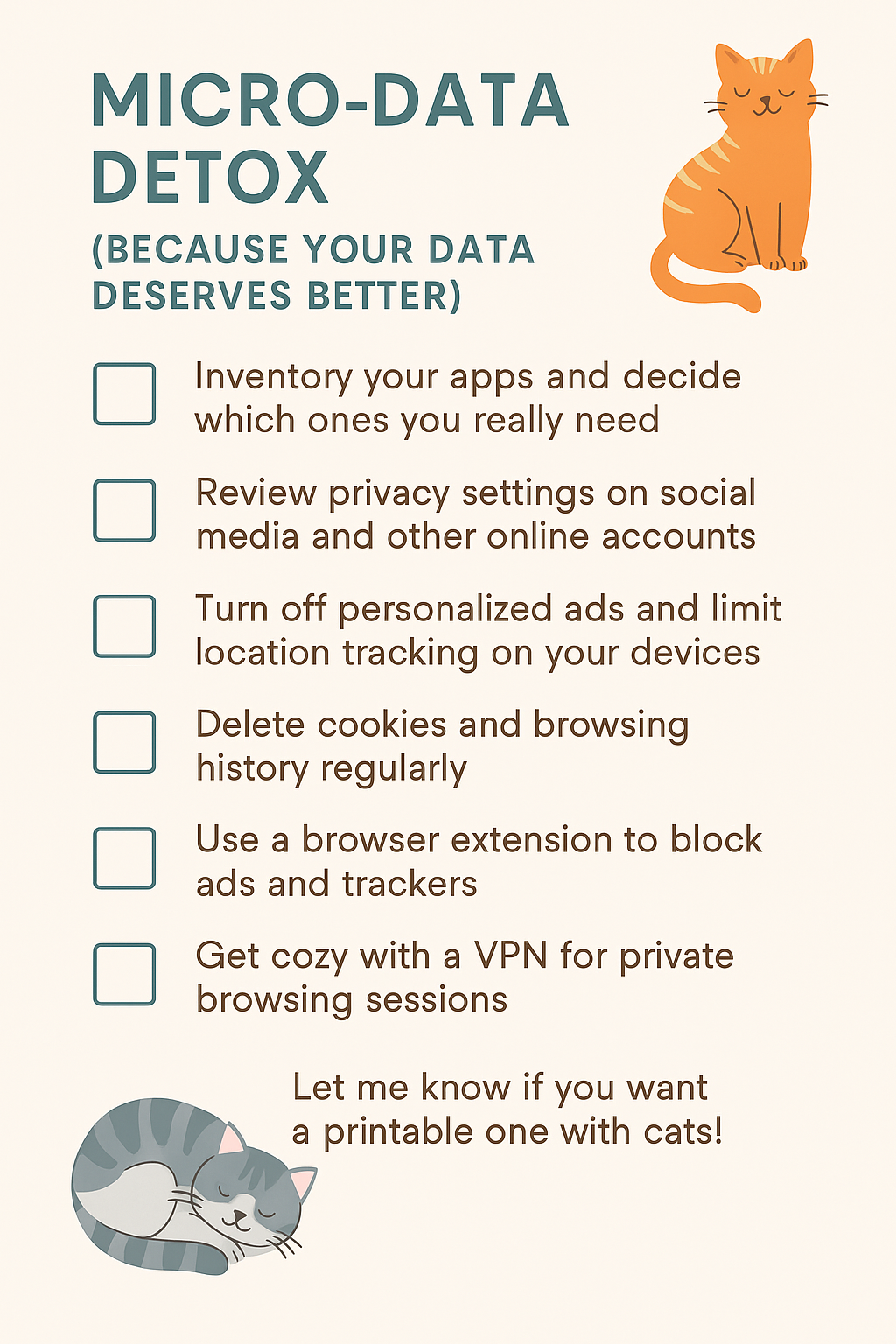
I still stream shows. I still online shop in bed. But now, I’m trying to be more intentional about it. I don’t want to feed an algorithm that’s designed to predict my next snack craving before I do.
Because if I’m only worth a few cents, and companies are building empires on my clicks, then maybe it’s time we started acting like our data matters. Because it does. In the hands of 330 million Americans or 1.4 billion people in India? It’s billions of dollars. Literally.
And yet, most of us are handing it over for free Wi-Fi and dopamine pings.
So no, I’m not logging off. But I am reading the fine print — or at least Googling what it means. And honestly, that feels like a pretty solid first step.
Sources:
 Brokebella
Comment